Massachusetts License
CS-123114
MA CSL · Unrestricted

Attic insulation is the work of bringing your attic floor or roof deck up to the target R-value with the right material, from blown-in loose-fill to spray foam, paired with air sealing of the leak points that let conditioned air escape before insulation can do its job.
It is the right call when heating and cooling bills are higher than they should be, when rooms feel cold at the ceiling in winter, or when ice dams are forming at the eaves. On Cape Cod, humid summers and salt-air winters put real pressure on attics: moisture that gets into an under-insulated roof deck causes damage that shows up later as rot or mold, and an unventilated attic speeds that along.
Daniel Araujo holds a Massachusetts Construction Supervisor License (CSL), Unrestricted (#CS-123114), and Forty One Construction is a BBB Accredited Business. We carry 51 Google reviews at 5 stars.
This page covers what an attic insulation job includes, what it costs in 2026, how the material options compare, and what air sealing and ventilation details a Cape Cod attic actually requires.
Attic Insulation · Cape Cod
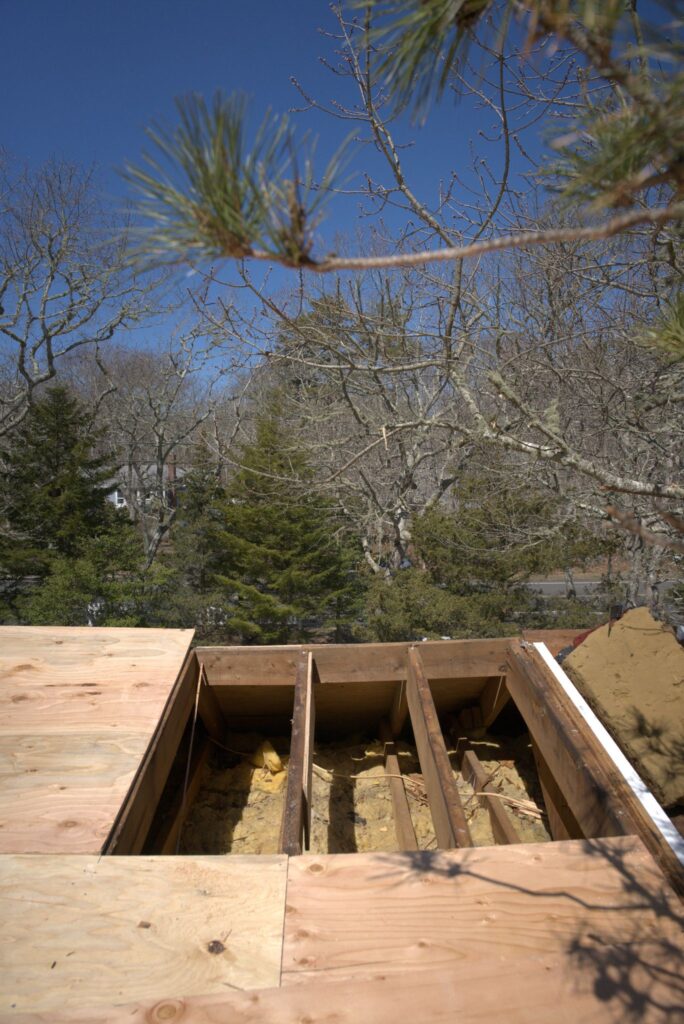
An attic insulation job with Forty One Construction runs through seven steps, from the first attic inspection to the final walkthrough in Hyannis. Each step has a clear purpose, and we confirm findings with you before moving to the next phase. Here is what each one covers.

Assessment · Phase One
We inspect the attic, check existing insulation depth and condition, look for signs of moisture, mold, pest activity, or a roof leak, and confirm that ventilation from soffit to ridge is open. You get a written scope before any material is ordered.
We seal the major air leak points before any insulation goes in: top-plate penetrations, wiring holes, can lights, chimneys, and the attic access hatch. Skipping this step and adding insulation over unsealed gaps is one of the most common shortcuts in attic work, and it leaves the thermal performance well below what the R-value label implies.

Installation · Phase Two
Our crew installs baffles at every rafter bay along the soffits to keep the ventilation channel open from soffit to ridge. Without baffles, blown-in material can block soffit vents, trap moisture, and cause the roof deck damage that insulation is supposed to prevent.
If existing insulation is contaminated, wet, or harboring pests, we remove it before new material goes in. Blown-in insulation over damaged or wet batts does not fix the underlying problem. Removal is quoted separately when it is needed.
New insulation goes in to the depth and material type specified: blown-in loose-fill for attic floors, batts for specific framing situations, or spray foam applied to the roof deck for a conditioned unvented attic assembly. Blown material is installed to the manufacturer settled-depth chart to hit the target R-value, not the as-installed fluffed depth.
Finish · Phase Three
The attic access hatch gets its own insulation and weatherstripping, since an uninsulated hatch is a direct thermal bypass through everything else we just installed. Depth rulers are placed per code documentation so the R-value is verifiable at inspection.
We confirm bath fan ducting terminates outside rather than into the attic, clean the job site, and walk the finished work with you. We do not call it done until you agree it is.

Attic Cost · Cape Cod
Attic insulation on Cape Cod typically runs $1.50 to $6 per square foot installed in 2026, with Forty One Construction quoting each job after an on-site inspection in Hyannis. Spray foam roof-deck jobs run higher. Mass Save rebate eligibility can reduce the net cost for qualifying homeowners.
A typical attic topped up with blown fiberglass or cellulose runs roughly $1,500 to $4,500, and spray foam roof-deck jobs run $5,000 to $9,000.
Cost Factors
The price moves with a handful of real drivers, including attic size, material choice, current insulation condition, air sealing scope, and the number of penetrations to seal.
More floor area and a steeper or tighter pitch both add time and material.
Blown fiberglass and cellulose cost less than spray foam. Closed-cell spray foam costs more than open-cell.
Adding depth over existing material costs less than a full removal and replacement, especially if the old material is contaminated.
More can lights, chimneys, wiring penetrations, and knee walls mean more air sealing labor before the insulation goes in.
A tight or low attic slows the crew and can add time to both air sealing and installation.
2026 Cost Guide
These ranges are a starting point for planning. Every job is quoted after an on-site attic inspection.
| Job size / scope | Typical range on Cape Cod (2026) |
|---|---|
| Blown-in top-up, standard attic (1,000-1,500 sq ft) | Roughly $1,500 to $4,500 installed |
| Full removal and replacement with blown-in material | Higher end; quoted after inspection and removal assessment |
| Spray foam roof-deck application | Typically $5,000 to $9,000 depending on area and foam type |
Mass Save rebate eligibility and permit lead time factor in too. Every job is quoted after an on-site inspection.
Get a Free Estimate →Insulation Materials · Cape Cod
The right insulation material depends on your attic assembly and how you use the space, but on Cape Cod, moisture management matters as much as R-value. Humid summers and salt-air winters create attic conditions that punish the wrong vapor control setup. Below are the main options we install, honestly compared.

Loose-Fill · Most Common
The most common attic floor option. Both materials blow into irregular spaces well and are installed to settled-depth charts to hit the target R-value. Cellulose is made from recycled paper and is treated for fire and pest resistance. Fiberglass is inorganic and does not absorb moisture. Both require proper baffle installation so soffit vents stay open.
Batts · Framed Sections
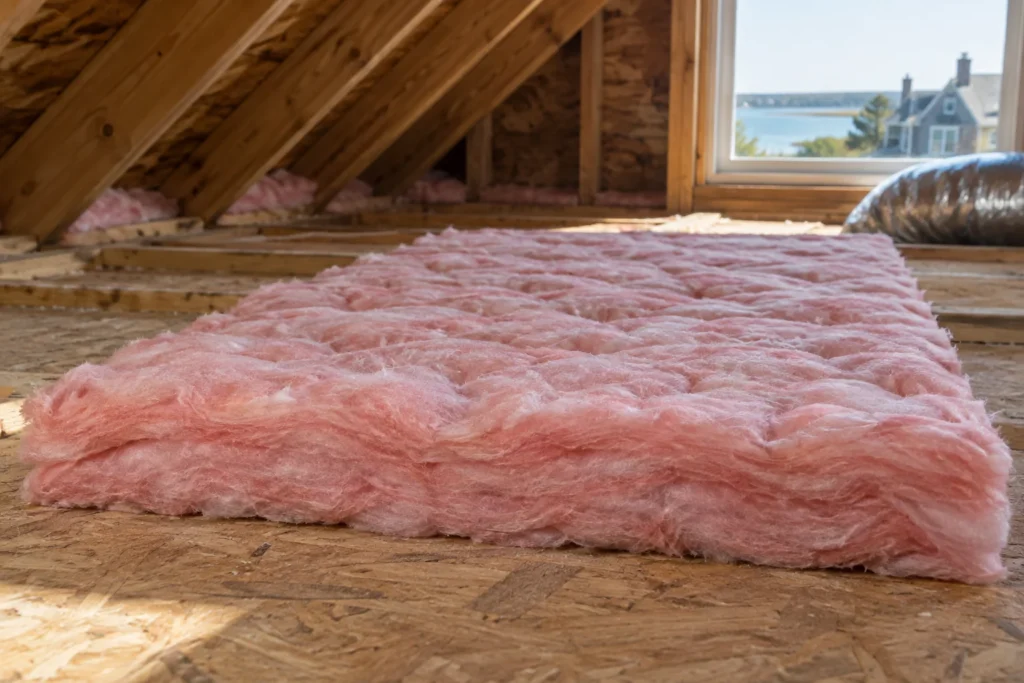
Kraft-faced or unfaced fiberglass batts work well in framed attic sections like knee walls or attic hatches where blown-in material would not stay in place. Batts must be fitted without compression or gaps around framing to hold their rated R-value. Compression kills performance faster than most homeowners expect.

Spray Foam · Roof Deck
Open-cell or closed-cell spray foam applied directly to the roof deck creates a conditioned, unvented attic assembly. It eliminates soffit-to-ridge ventilation requirements, air-seals as it insulates, and is the right call for finished attic spaces or where duct systems run through the attic. Closed-cell adds a vapor retarder. It costs more than blown-in and should not have a vapor barrier trapped against it in a way that causes moisture entrapment.

Removal · When Needed
When existing insulation is wet, contaminated with mold or pest activity, or contains vermiculite or other hazardous material, it needs to come out before new material goes in. Adding depth over damaged insulation does not restore R-value or fix a moisture problem. Removal and disposal are quoted separately and handled before air sealing and reinstallation begin.

Rebates · Mass Save
Massachusetts homeowners may qualify for Mass Save rebates that offset the cost of attic insulation upgrades. Rebate eligibility depends on the home, the utility provider, and the scope of work. We can tell you whether the job is likely to qualify when we do the inspection, but rebate approval is between you and the utility program.
Material Comparison
Compare where each material fits best, how it handles Cape Cod's moisture and salt air, and the level of maintenance or vapor management it requires.
| Option | Best for | Moisture management | Maintenance |
|---|---|---|---|
| Blown-in fiberglass | Attic floors | Good, inorganic material | Low |
| Blown cellulose | Attic floors | Good with proper vapor control | Low |
| Fiberglass batts | Knee walls, hatches | Good if fitted correctly | Low |
| Open-cell spray foam | Roof deck, finished attics | Good, air seals as it insulates | Very low |
| Closed-cell spray foam | Roof deck, vapor control | Excellent, acts as vapor retarder | Very low |
We name real brands when we spec a job: blown fiberglass from Owens Corning AttiCat or Johns Manville, cellulose from Greenfiber or Nu-Wool, and batts from Owens Corning or CertainTeed. Spray foam systems include Icynene and Demilec. If a less costly material fits the job, we will tell you.
Project Timeline · Cape Cod
An attic insulation job with Forty One Construction typically takes one day for air sealing plus blown-in on a standard attic, one to two days for larger or more complex attics with extensive air sealing, and one to two days for full removal and replacement or spray foam roof-deck application including cure time.
A few things can stretch that window here. Permit requirements in Hyannis add lead time before work starts. Spray foam needs cure time before the attic can be re-entered. And summer traffic on Route 28 and Route 6 between Memorial Day and Labor Day affects crew arrival and material delivery, which we build into an honest schedule rather than promising a date we cannot hold.
Attic Details · Cape Cod
The air sealing and ventilation details are everything you do not see once the insulation is in, and they decide whether the R-value on paper matches what the house actually holds. On Cape Cod, two details separate a job that performs from one that looks right but does not: soffit-to-ridge ventilation and attic air sealing at the top plates and penetrations.
A baffle is the channel installed at each rafter bay along the eaves to keep a clear path for air to move from the soffit vents up to the ridge vent. Without baffles, blown-in insulation drifts against the soffit and blocks that airflow. A blocked soffit in a Cape Cod attic means moisture buildup, accelerated roof deck deterioration, and the ice dam conditions that form when heat escapes unevenly through the roof. We install baffles at every rafter bay before any loose-fill material goes in. It is not optional, it is what keeps the insulation from causing the problem it is supposed to prevent.
Air sealing is performed before insulation is installed, not after. We seal top-plate penetrations, wiring holes, can lights, chimney chases, and the attic access hatch with appropriate materials for each condition. Wind-driven rain and the pressure differences that come with coastal nor'easters push air through every gap in the thermal envelope. An attic hatch with no insulation or weatherstripping is a direct bypass through everything else installed around it. Joists and framing members that cross the insulation plane create thermal bridging that degrades performance; we address those in the air sealing phase. The finished job meets Massachusetts energy code under 780 CMR, which sets R-49 as the minimum for attic floors in most of the state.
Local Insulation · Cape Cod
Forty One Construction installs attic insulation across Cape Cod from our office in Hyannis, and the coastal conditions shape every job. Humid summers and salt-air winters create attic moisture conditions that punish the wrong ventilation or vapor control setup. Ice dams are a known risk here, and an attic that is under-insulated or improperly vented is the primary driver. We build to local conditions, not to a generic spec.
We serve homeowners from the outer Cape through the canal, Provincetown, Truro, Wellfleet, Eastham, Orleans, Chatham, Brewster, Harwich, Dennis, and Yarmouth on one side, and Hyannis, Centerville, Osterville, Cotuit, Mashpee, Falmouth, Bourne, Sagamore, Sandwich, and Barnstable through the mid- and upper Cape, along with Plymouth. See our work in Hyannis and Barnstable.

Credentials · Accountability
Daniel Araujo holds a Massachusetts Construction Supervisor License (CSL), Unrestricted (#CS-123114), and the company holds Home Improvement Contractor registration #217279. We carry $1,000,000/$2,000,000 general liability coverage, and a certificate of insurance is available on request. The numbers are printed so you can check them. Learn more about us.
We submit drawings to the Town of Barnstable Building Division and pull the permit in our name. Footings reach frost depth, ledgers get through-bolted and flashed, and every connection is built to pass framing and final inspection, not just to look finished.
You get a written scope up front, so the number in your hand is tied to specific materials and work, not a vague figure that grows halfway through. When quotes look interchangeable on paper, that's usually where the real difference sits.
Roofing Services · Cape Cod
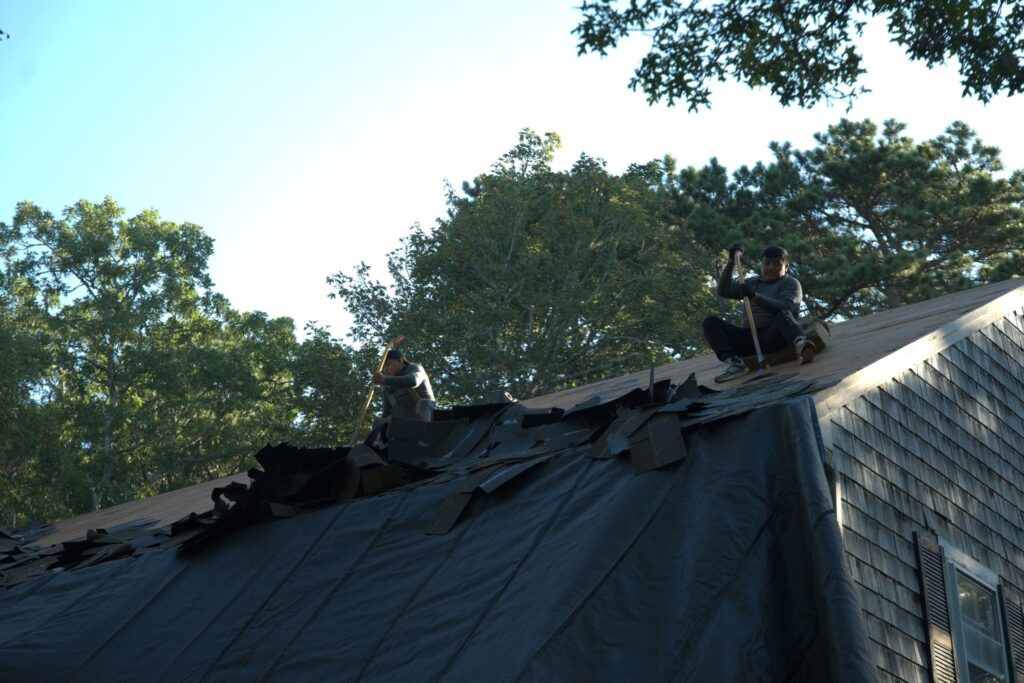
Attic insulation work often surfaces related needs in the same visit. If there is a roof leak contributing to moisture in the attic, our roofing services in Hyannis address that before new insulation goes in. As a GAF Certified Residential Roofing Contractor, we can assess the full roof assembly and, on qualifying GAF roofing systems, offer the GAF System Plus Limited Warranty.